We design and build to these standards as part of the process, not as a post-launch remediation pass. In Washington, this is usually what determines vendor eligibility before anyone opens a portfolio. Remediating a finished site costs more and works less well than building correctly from the first wireframe.
Washington, DC
DC Web Design and Digital Marketing Agency
Washington, D.C.
Office
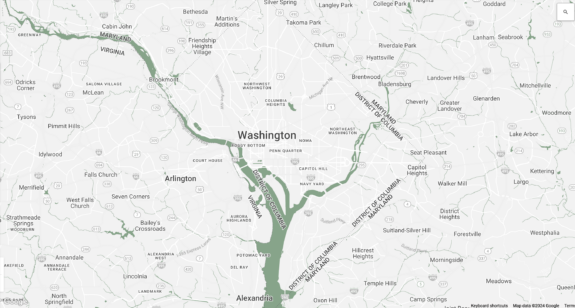
Our Washington DC office serves organizations across the District, Northern Virginia, and Maryland with web design and digital marketing, including sites built to WCAG accessibility standards. Call us or schedule a discovery call using the details below.
1101 Connecticut Avenue NWSuite 450Washington, DC 20036
PH: 1-202-900-8859eFax: 1-888-308-8990Sales: Ext. 102
LOCAL EXPERTISE. MEASURABLE RESULTS. Welcome to
Lounge Lizard in
Washington, D.C.
In most markets, we have to explain why accessibility compliance matters. In Washington, it’s on the intake form.
Lounge Lizard builds for organizations operating in and around federal Washington. We rebuilt the three-brand digital ecosystem for Leading Authorities, the speakers bureau on Connecticut Avenue, and launched it in March 2026. We built the site for Analytica, an SBA-certified 8(a) and HUBZone firm supporting federal health, civilian, and national security missions. We built HIVE, the Health Information Vision Exchange, where industry and government collaborate on Federal Health IT.
For organizations across DC, Northern Virginia, and Maryland, that work covers web design and development, SEO, paid search and social media, and the branding underneath it. Since 1998, we’ve worked with clients where procurement, compliance review, and Section 508 audits are all part of the engagement, and we handle all of it in-house. The people who plan the work are the people who do it.
Our DC-Area Work
LAI Speakers / Leading Authorities
Leading Authorities is a Washington, D.C.-based speakers bureau offering keynote talent, live event production, and video communications.
Created a coordinated WordPress presence for LAI Speakers, LAI Video, and LAI Live, working with the client’s internal design and video teams. Shared design standards, clearer navigation, and streamlined inquiry forms strengthened brand consistency and made it easier to discover speakers and move between services.
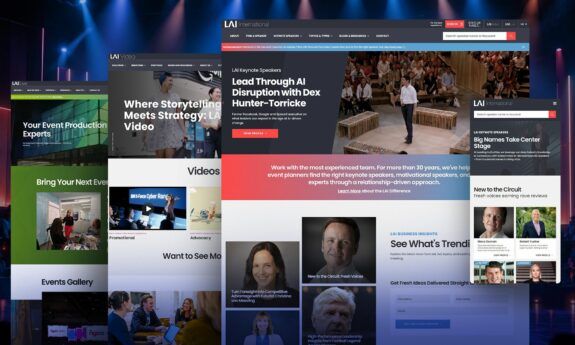
Website Strategy, UX/UI Design, WordPress Development
Our Washington, D.C. Work
Ernest Maier
Based in Bladensburg, Maryland, Ernest Maier manufactures and supplies building materials for contractors, architects, and homeowners across the Mid-Atlantic.
Redesigned the website around clearer brand messaging, product education, material calculators, and a searchable project gallery. These tools helped customers research products and plan purchases.
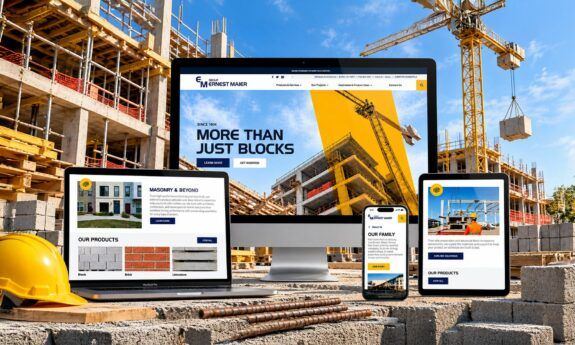
Branding, Website Redesign, Interactive Material Calculators, Ongoing SEO & Marketing
SEO for DC Organizations
Search in Washington works differently. The people looking for you are often contracting officers, association members, grant makers, and policy staff, and many of them search for capabilities, certifications, and past performance rather than a brand name. You are also often one of dozens of organizations with similar names and acronyms, which makes it harder for Google and AI systems to tell who you are.
Our DC SEO work covers:
- Technical SEO: site architecture, crawlability, Core Web Vitals, and migrations that keep existing rankings intact.
- Entity and AI search optimization: structured data and consistent entity signals so search engines and AI systems can separate your organization from similarly named ones and describe it correctly.
- Capability and content strategy: pages built around the services, certifications, and past performance evaluators actually search for, planned from your Search Console data.
- Local search: Google Business Profile, citations, and local visibility across DC, Northern Virginia, and Maryland.
Accessibility and SEO share most of the same foundation. Semantic structure, clean heading hierarchy, and descriptive media help screen readers and search engines alike, so a site built to Section 508 from the first wireframe starts with an advantage in search.
differentiator
Built for Compliance, Not Just Design
Most agencies can build you a good-looking site. Fewer can pass a Section 508 review, migrate a decade of institutional content without breaking search, or work through a public-sector procurement process.
Section 508 and WCAG, in-house.
Federal and government-adjacent experience.
Analytica in federal health and national security, HIVE in Federal Health IT, and CCI Health Services in community healthcare. These engagements come with procurement requirements, security reviews, and approval chains that commercial projects don’t have.
Multi-brand architecture.
The LAI ecosystem spans three divisions with distinct functions and a common identity. Associations, agencies, and holding organizations in this market have the same structural problem, and solving it badly means either three disconnected sites or one site that serves nobody well.
Stakeholder-heavy projects.
Work here means satisfying communications, IT, legal, government relations, and leadership at the same time. We build the review process into the timeline instead of discovering it in week ten.
WHAT We do
In Washington D.C.
Web Design and Development
- Custom websites for DC organizations, built for performance, Section 508 accessibility, and the systems you already run, including WordPress, Drupal, Laravel, and enterprise CMS platforms.
Multi-Brand and Membership Platforms
- Unified digital ecosystems for organizations with multiple divisions, plus member portals, event registration, and content systems your internal team can actually maintain.
SEO and AI Search Optimization
- DC SEO covering technical fixes, content, and local visibility across DC, Northern Virginia, and Maryland, plus the entity and structured data work that determines whether AI systems describe your organization correctly, which matters more in a market where you are one of dozens of similarly named entities.
Paid Media, Social Media, and Marketing Automation
- Google Ads, paid social, and social media marketing for membership, event, and advocacy campaigns, managed against pipeline with Salesforce or HubSpot integration so results are traceable past the form fill.
Branding and Creative
- Brand strategy, messaging, and visual identity for organizations whose positioning has drifted from what they actually do now.
Frequently Asked Questions
Do you build Section 508 compliant websites?
Yes, and we build it into our process rather than adding it afterward. That includes semantic structure, keyboard navigation, contrast and typography standards, accessible forms and media, and pre-launch testing. For federal agencies, contractors, and federally funded organizations, accessibility is usually a threshold requirement rather than an enhancement, and remediating a finished site is both more expensive and less reliable than building correctly from the start.
Do you work with organizations across DC, Northern Virginia, and Maryland?
Yes. Our Washington-area clients include Leading Authorities on Connecticut Avenue, Analytica in Bethesda, and Ernest Maier in Maryland building materials. We serve the full DC region from our office at 1101 Connecticut Avenue NW.
Do you offer SEO for DC organizations?
Yes. For most DC organizations, SEO means two things: being findable by the evaluators, members, and partners who search by capability rather than by name, and being clearly distinguishable from the similarly named organizations around you. We handle technical SEO, content and capability strategy, local search, and the structured data and entity work that search engines and AI systems depend on.
Do you handle digital marketing, or just websites?
Both. Our digital marketing work covers SEO, paid search, paid social and social media marketing, email, marketing automation, and conversion rate optimization. For associations, that usually means membership acquisition and renewal, event registration, and advocacy campaigns. For contractors and consultancies, it means reaching evaluators and teaming partners. Because we also build the sites, campaigns land on pages designed to convert rather than on pages someone else has to fix.
Do you work with federal contractors and government-adjacent organizations?
Yes. Our Washington-area work includes Analytica, an SBA-certified 8(a) and HUBZone firm supporting federal health, civilian, and national security missions, and HIVE, the Health Information Vision Exchange, where industry and government collaborate on Federal Health IT. We understand these engagements come with procurement requirements, security reviews, and approval chains that commercial projects don’t have.
Can you handle a multi-brand or multi-division digital presence?
Yes. We rebuilt the Leading Authorities ecosystem across three divisions, LAI Speakers, LAI Live, and LAI Video, giving each its own specialized functionality under a unified visual identity. Organizations with divisions, chapters, or subsidiary brands usually face a choice between three disconnected sites and one that serves nobody well. There’s a third option, and it’s an architecture decision made early, not a design decision made late.
Do you work with associations and membership organizations?
Yes. Member portals, credentialing systems, event registration, and advocacy content carry requirements most commercial sites don’t, including multi-tier access, renewal workflows, and content that has to serve members and the public differently.
How much does a website from Lounge Lizard cost?
Every project is scoped individually, because cost is driven by scope: the number of page templates, integrations with your CRM or AMS, content migration volume, accessibility and compliance requirements, and how many stakeholder groups need to sign off.
Most of our engagements are custom builds for established organizations and institutions, places where the website carries real business weight and the project involves multiple teams. We’re not a fit for template sites or single-page builds. If you’re comparing us against a DIY builder or a freelancer, we’ll be the more significant investment, and we’ll tell you that on the first call rather than after a proposal.
After discovery, you receive a detailed proposal with scope, deliverables, timeline, and cost.
Can we meet with your team in person?
Yes. We keep an office at 1101 Connecticut Avenue NW and meet with Washington clients on-site when a project calls for it, including kickoffs, brand workshops, and other major events. Day to day, our senior team works with you over video, shared project management systems, and weekly or bi-weekly reporting calls.
How long does a website project take?
It depends on scale and how many people need to approve the work. A focused informational site can run several weeks. An association platform, federal-adjacent build, or multi-brand ecosystem typically runs several months or more, depending on size.
We schedule accessibility testing and approval cycles explicitly because, in this market, they’re the two phases most often underestimated.