
Why Website Traffic Is No Longer the Only SEO Metric That Matters
For years, one number dominated SEO reports: organic website traffic.
More visitors usually meant better rankings, stronger visibility, and a successful SEO strategy.
SEO has changed. Organic traffic is still valuable, but it no longer tells the full story.
Google is answering more questions directly in search results. AI-powered search experiences are helping users research companies without always clicking through to a website. Customers are discovering brands through Google Maps, featured results, AI-generated answers, videos, reviews, and other search experiences before they ever reach a traditional landing page.
That means a website can experience flat traffic while its actual search visibility, lead quality, branded demand, and revenue continue to improve.
Businesses need to look beyond sessions and clicks and measure what their SEO strategy is actually accomplishing.
Quick Answer
Website traffic is still an important SEO metric, but it should not be viewed in isolation. Modern SEO performance should also be measured through search visibility, keyword rankings, conversions, qualified leads, engagement, branded searches, local actions, and visibility within AI-powered search experiences.
The goal of SEO isn’t simply to generate more visitors.
It is to attract the right audience, improve brand visibility, and turn search demand into measurable business growth.
Why Organic Traffic Does Not Tell the Whole Story
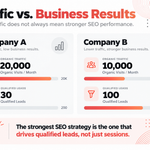
Imagine two companies.
Company A receives 20,000 organic visits each month but generates 30 qualified leads.
Company B receives 10,000 organic visits but generates 100 qualified leads.
Which website has the stronger SEO strategy?
Traffic alone would suggest Company A.
However, business results tell a completely different story.
This is why looking only at website sessions can create a misleading picture of SEO performance.
An effective SEO strategy should bring potential customers closer to taking action. Depending on the business, that could mean:
- Requesting a quote
- Calling the company
- Booking an appointment
- Purchasing a product
- Completing a contact form
- Downloading a resource
- Visiting a physical location
- Searching for the brand later
- Returning to the website through another marketing channel
SEO should ultimately drive business growth, not simply increase a number in Google Analytics
Search Behavior Is Changing
The way people use search engines is becoming even more fragmented.
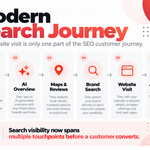
A potential customer might begin with a broad Google search, read an AI-generated summary, compare several businesses, check reviews, visit a Google Business Profile, search a company name, and then return later through a direct visit.
The website visit is only one part of that customer journey.
Search engines are also increasingly providing information before someone clicks.
Users can find answers through:
- Featured snippets
- Google Maps
- Local search results
- People Also Ask results
- Product listings
- Video results
- Knowledge panels
- AI-powered search results
- Generative AI platforms
As these experiences become more common, impressions and brand exposure can increase even when clicks do not increase at the same rate.
That does not necessarily mean SEO is performing poorly; it simply means businesses need a wider way to measure it.
The SEO Metrics That Matter Beyond Website Traffic
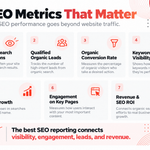
No single metric can replace organic traffic; instead, businesses should look at several SEO performance metrics together to understand whether their strategy is actually working.
1. Organic Search Impressions
Impressions measure how often your website appears in search results. This is becoming increasingly important because search visibility doesn’t always lead to an immediate click.
If impressions are increasing, it can indicate that Google is showing your website for more searches and that your overall search presence is expanding.
Monitor impressions across:
- Important service pages
- Product pages
- Blog content
- Local landing pages
- High-value keywords
- Branded searches
Increasing impressions often indicates that SEO improvements are making progress.
2. Qualified Organic Leads
Not every website visitor has the same value. Someone researching a general industry term may never become a customer. Someone searching for a specific service in their area may be ready to contact a business immediately.
That is why qualified leads are one of the most important SEO metrics that matter for businesses focused on growth.
Track actions such as:
- Contact form submissions
- Quote requests
- Demo requests
- Consultation bookings
- Phone calls
- Ecommerce purchases
- Appointment scheduling
An SEO campaign that generates fewer visitors but more qualified opportunities can be significantly more valuable than one focused entirely on traffic volume.
3. Conversion Rate From Organic Search
Traffic tells you how many people arrived. Conversion rate tells you what they did after arriving.
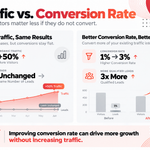
If organic traffic increases by 50% but leads remain unchanged, the additional traffic may not be reaching the right audience.
On the other hand, improving your organic conversion rate from 1% to 3% could dramatically increase leads without generating a single additional visitor.
Improving organic conversions often requires SEO and website optimization to work together.
That includes:
- Matching pages with search intent
- Creating clearer calls to action
- Improving page speed
- Simplifying forms
- Strengthening landing page copy
- Improving mobile usability
- Establishing trust through reviews and case studies
- Making services easier to understand
Getting users to your website is only half the job; the website still needs to convince them to act.
4. Keyword Visibility and Search Position
Individual keyword rankings can fluctuate, so businesses should avoid obsessing over whether one keyword moved from position four to position six.
However, overall keyword visibility remains extremely valuable.
Instead of tracking only a handful of keywords, look at broader trends, such as:
- Are you appearing for more relevant searches?
- Are important service pages moving into stronger positions?
- Are you gaining visibility for high-intent terms?
- Are more pages appearing on the first page of search results?
The goal should be increasing your overall presence across the topics your customers actually search for.
5. Branded Search Growth
One SEO metric businesses often overlook is branded search.
Branded searches occur when someone searches specifically for your company, product, or service by name. An increase in branded search demand can indicate that more people are becoming aware of your business.
For example, a customer might discover Lounge Lizard while researching web design agencies but not contact the company immediately.
Several days later, that person may search directly for “Lounge Lizard web design.”
The earliest SEO exposure influenced the customer journey even though the final visit may look like branded organic traffic or even direct traffic.
Monitoring branded search trends can help businesses understand whether their overall visibility and recognition are increasing.
6. Engagement With Important Pages
If a page doesn’t answer a visitor’s question almost immediately, then it’s most likely not viewed as valuable content. Instead of looking only at sessions, marketers should examine how users interact with important organic landing pages.
Useful engagement indicators can include:
- Engagement rate
- Time spent on key pages
- Pages viewed during a session
- Form interactions
- Video engagement
- Internal link clicks
- Return visits
- Product or service page views
The exact metric will depend on the website; what matters is whether organic visitors interact with the content and move deeper into the customer journey.
7. Revenue and SEO ROI
Ultimately, businesses invest in SEO because they expect it to create value, so revenue is one of the most important measurements available.
For ecommerce businesses, tracking revenue from organic search is fairly simple.
For service businesses and B2B organizations, the journey can be more complicated. A visitor may discover a company organically, return several times, speak with a sales representative, and close weeks or months later.
Businesses should connect SEO reporting with their CRM and lead tracking whenever possible.
It’s necessary to look beyond increases in organic traffic and start asking questions such as:
- “How many opportunities did organic search generate?”
- “What was the value of those opportunities?”
- “How many became customers?”
- “What revenue can be connected to organic search?”
These questions turn SEO reporting from a marketing report into a business performance report.
AI Search Visibility Is Becoming Another Metric to Watch
Traditional search rankings are no longer the only place where brands can earn visibility.
Customers increasingly use AI-powered tools to research products, compare companies, understand services, and answer complex questions.
That creates a new SEO measurement: brands appearing in AI-generated answers.
Businesses should begin paying attention to whether their company, content, products, research, or expertise are referenced across AI-driven search experiences.
This does not mean traditional SEO is disappearing. In fact, many of the same fundamentals remain important:
- Clear website structure
- Helpful content
- Topical authority
- Original expertise
- Strong brand signals
- Accurate information
- Quality backlinks
- Structured content
- Trustworthy sources
The difference is that your content may now create value without generating a traditional organic click every time it appears.
Stop Asking “How Much Traffic Did We Get?”
In this day and age, marketers shouldn’t be asking about the amount of traffic visiting a site. Instead, a more robust SEO report should answer several questions such as:
- Are more potential customers finding the brand?
- Is the website appearing for more valuable searches?
- Are organic visitors converting?
- Are qualified leads increasing?
- Is branded demand growing?
- Are important pages gaining visibility?
- Is SEO adding to revenue?
- Is the brand appearing across emerging AI search experiences?
Traffic should still be part of the conversation, but it shouldn’t be the entire conversation.
What Does Successful SEO Look Like in 2026?
Successful SEO is becoming less about maximizing clicks and more about increasing meaningful visibility.
A strong strategy connects search performance with actual business objectives.
For one company, that may mean increasing ecommerce revenue.
For another, it may mean generating more qualified B2B leads.
For a local business, it could mean increasing phone calls, bookings, Google Maps visibility, and direction requests.
No universal KPI defines SEO success.
The right measurements depend on what the business needs search to accomplish.
Frequently Asked Questions
Is website traffic still important for SEO?
Yes. Organic website traffic remains an important indicator of SEO performance, but it should be evaluated alongside conversions, impressions, rankings, engagement, lead quality, and revenue.
What is the most important SEO metric?
No single metric is most important for every business. Companies should choose KPIs based on their business goals. For many organizations, qualified leads, conversions, and revenue better measure SEO success than traffic alone.
Can SEO be successful if traffic decreases?
Yes. If low-value traffic decreases while qualified leads, conversions, search visibility, or revenue increase, SEO may still be producing stronger business results.
How should businesses measure SEO ROI?
Businesses should track organic leads and sales through analytics platforms, call tracking, ecommerce reporting, and CRM systems whenever possible. This makes it easier to connect search visibility with actual revenue.
Does AI search change how SEO should be measured?
Yes. As customers increasingly receive answers directly through search engines and AI platforms, businesses should pay more attention to impressions, brand awareness, citations, branded search demand, and conversions rather than relying solely on website clicks.
The Bottom Line
Website traffic still matters, but the definition of SEO success is expanding.
Search is no longer simply a competition to generate the most organic clicks. It is about making your brand visible when potential customers are researching, comparing options, asking questions, and making decisions.
Businesses that focus only on traffic risk missing the bigger picture.
The strongest SEO strategies connect visibility with engagement, leads, conversions, and revenue.
At Lounge Lizard, we build SEO and digital marketing strategies around measurable business growth, not vanity metrics. From technical SEO and content strategy to AI search optimization, conversion optimization, and website design, our team helps businesses improve their visibility while turning search demand into real opportunities.
If your website is getting traffic but you are not sure whether that traffic is actually creating business value, contact Lounge Lizard for an SEO audit and discover which search metrics matter most for your growth.